
Automotive Industry
Application Based Centrifugal Casting Solutions

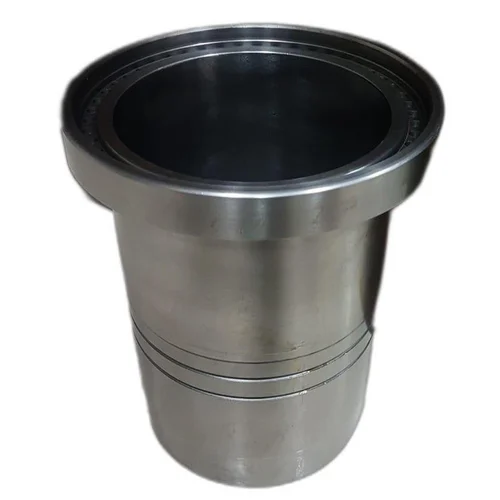
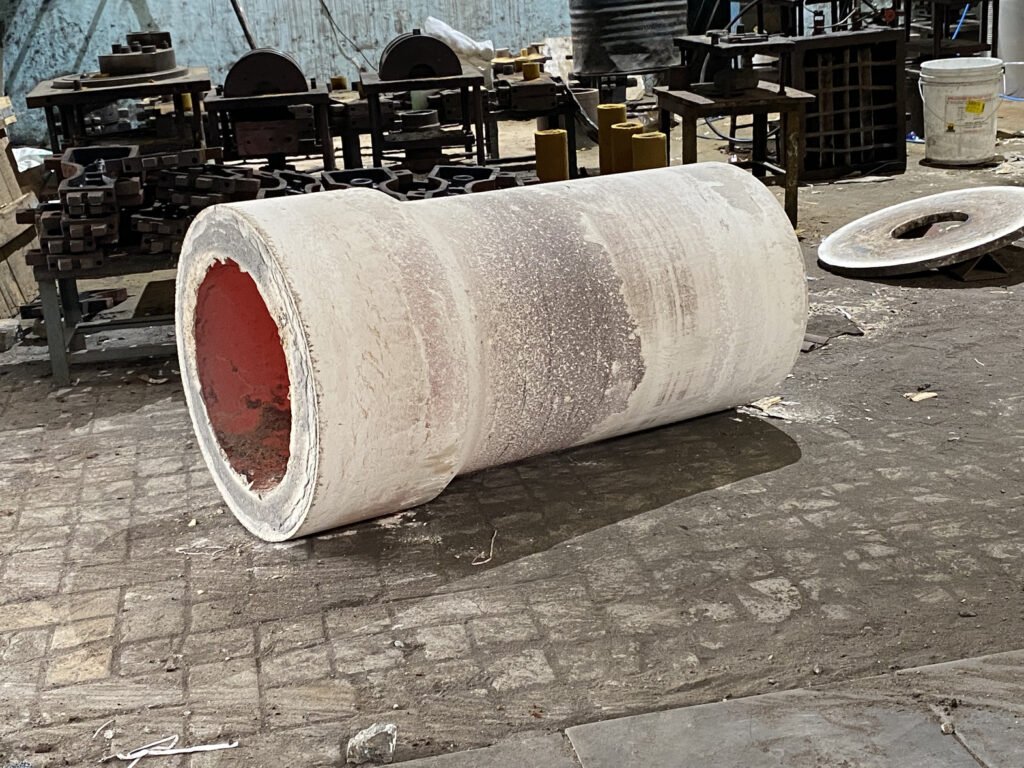
Application 1: Cylinder Liners
Application Overview
Cylinder liners are critical engine components used in automotive and heavy vehicle engines. They operate under high combustion pressure, friction, and thermal load, requiring excellent wear resistance and dimensional accuracy.
Why Centrifugal Casting for Cylinder Liners?
Centrifugal casting produces dense outer wall structures with uniform material distribution, enhancing wear resistance, strength, and fatigue performance while ensuring consistent internal bore quality.
| Parameter | Requirement |
| Outer Diameter Range | 80 mm – 1000 mm |
| Length | Up to 2000 mm |
| Material Grades | Alloy Cast Iron, Ni-Resist Iron |
| Wall Thickness Control | High precision uniform distribution |
| Surface Finish | Machining allowance optimized for honing |
Recommended Machine Solution
HCC Series – Horizontal Centrifugal Casting Machine
- Stable RPM control for liner casting
- High repeatability for mass production
- Optimized mold cooling system
- Automation integration available (ACS Series)
Technical Advantages
- High wear resistance due to dense outer structure
- Reduced internal defects
- Consistent bore concentricity
- Suitable for high-volume automotive production
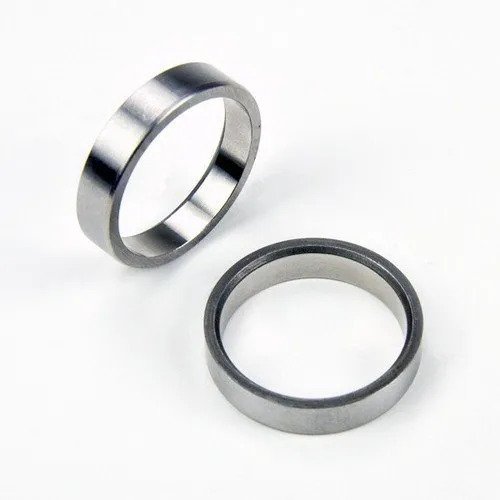
Application 2: Valve Seats
Application Overview
Valve seats are precision ring components installed in engine cylinder heads. They must withstand repeated thermal cycles, mechanical impact, and corrosive exhaust gases.
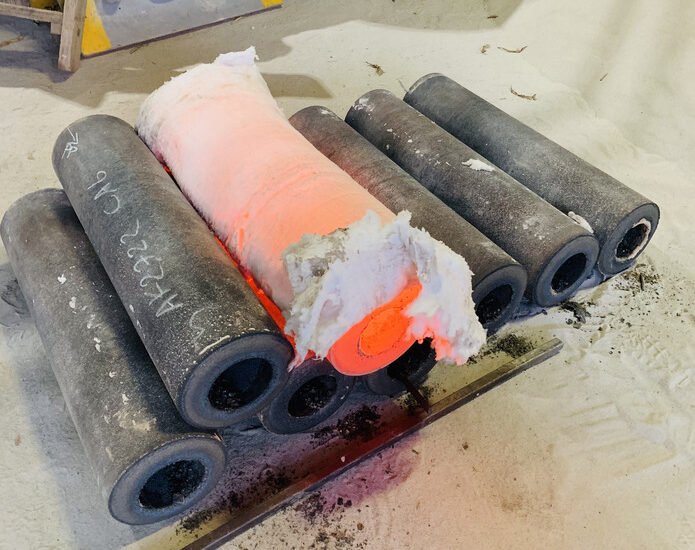
Why Vertical Centrifugal Casting?
Vertical centrifugal casting ensures high concentric accuracy and uniform radial density, making it ideal for small ring-type components like valve seats.
Casting Requirements
| Parameter | Requirement |
| Outer Diameter Range | 40 mm – 200 mm |
| Material Grades | High alloy cast iron, wear-resistant alloys |
| Concentric Accuracy | High precision vertical casting |
| Wall Thickness | Uniform radial control |
| Production Volume | Batch or mass production |
Recommended Machine Solution
VCC Series – Vertical Centrifugal Casting Machine
- High concentric precision
- Stable spindle rotation system
- Compact mold handling system
- PLC automation option for batch control
Technical Advantages
- Enhanced wear resistance
- High structural integrity
- Dimensional repeatability
- Reduced machining allowance
Application 3: Piston Rings
Application Overview
Piston rings are high-precision thin-wall components used in engine assemblies. They require tight dimensional tolerances and uniform microstructure to ensure optimal sealing performance.
Why Vertical High-Speed Casting?
Vertical centrifugal casting at controlled high RPM ensures thin-wall accuracy, uniform density, and improved mechanical strength for piston ring applications.
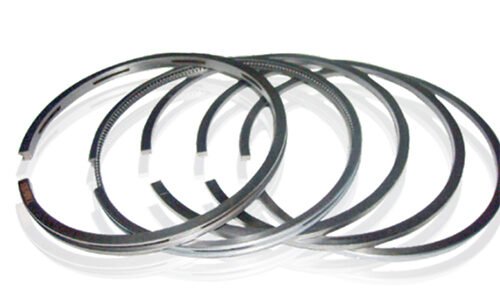
Casting Requirements
| Parameter | Requirement |
| Outer Diameter Range | 60 mm – 250 mm |
| Wall Thickness | Thin wall precision casting |
| Material Grades | Alloy cast iron, ductile iron |
| Tolerance Requirement | High dimensional control |
| Surface Integrity | Uniform microstructure for machining |
Recommended Machine Solution
VCC High-Speed Series – Vertical Centrifugal Casting Machine
- High RPM stability
- Precision mold clamping system
- Controlled cooling cycle
- Automation ready configuration
Technical Advantages
- Superior dimensional accuracy
- Consistent microstructure
- Reduced internal defects
- Optimized for high-volume automotive manufacturing